
Components of a Solar Panel System
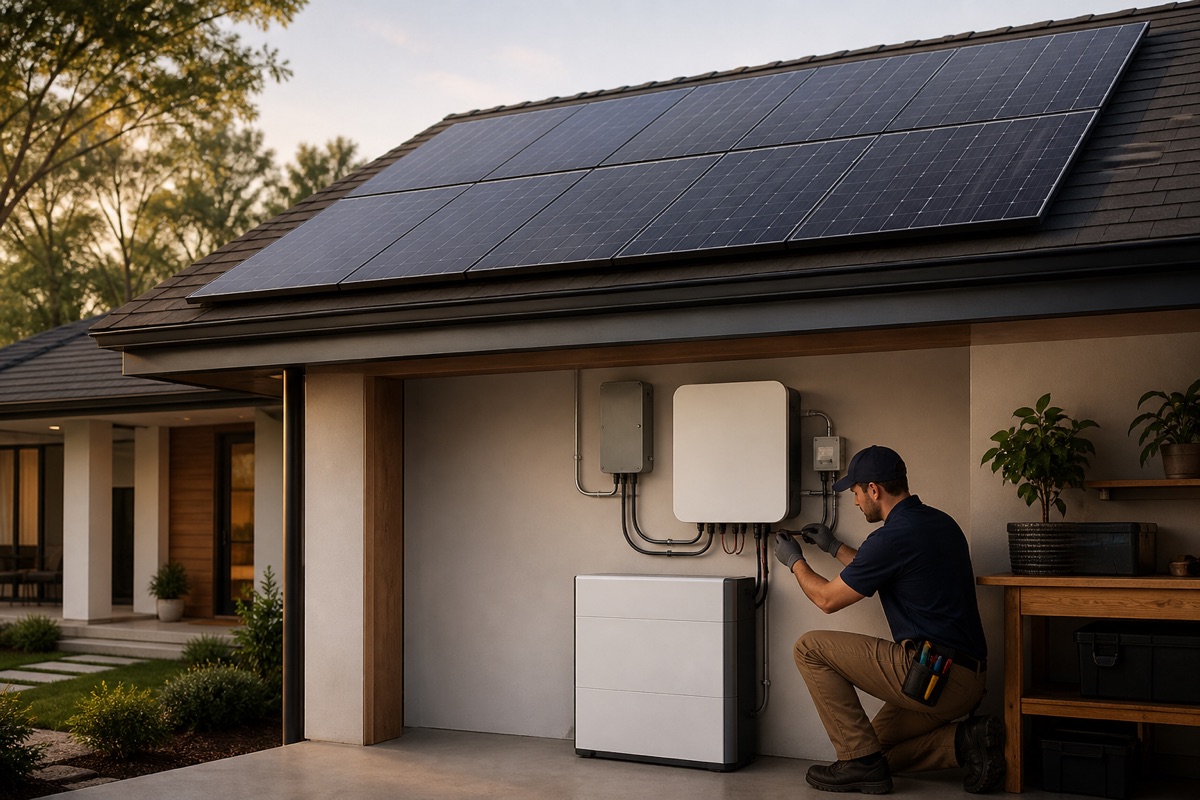
A complete home solar system is more than the modules visible on the roof. Mounting equipment, power electronics, safety devices, monitoring, and the home’s electrical panel all play a role. Some systems also include battery storage. Knowing the components helps homeowners understand what is included in a proposal.
Solar Modules and Mounting
Photovoltaic cells are wired together inside a protective module, commonly called a solar panel. Multiple panels form an array. Racking attaches the array to the structure and creates a durable connection designed for local wind, weather, and roof conditions. Flashing and seals help protect roof penetrations when the mounting design requires them.
Inverter
Panels generate direct-current electricity, while the home uses alternating current. The inverter makes that conversion. String inverters serve groups of panels, sometimes with panel-level optimizers. Microinverters perform the conversion at each panel. Equipment selection affects monitoring detail, shade response, service approach, and price.
Electrical and Safety Equipment
Disconnects, breakers, wiring, and rapid-shutdown equipment allow the system to operate safely and comply with electrical and fire codes. Solar power flows into the home’s electrical panel, where it can serve household loads. The design must be compatible with the existing service and utility requirements.
Meter, Grid Connection, and Monitoring
A utility meter records energy moving between the home and grid according to local rules. Monitoring hardware and software report production, system status, and sometimes household consumption. These tools are useful for understanding daily and seasonal patterns.
Optional Battery Storage
A compatible battery can store excess solar production for later use. Systems designed for backup also require controls that safely isolate selected home circuits from the utility during an outage. Storage is optional, and its value depends on local rates, outage concerns, incentives, and household priorities.
Each part must be designed as a system. A qualified provider should explain the equipment, warranties, expected production, and how the components work together at the property.